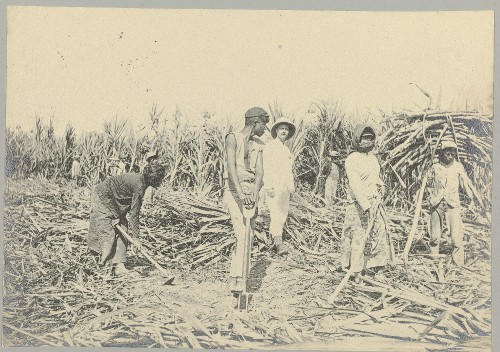
Sugar, once a rare luxury good, is now an everyday foodstuff. But it was only in the early modern era that sugar consumption began to rise rapidly. In the 19th century, growth in production made sugar affordable for ever more people – between 1840 and 1940 alone, production increased twenty-fivefold. Popular new hot drinks such as coffee, tea and cocoa contributed to this rise.
Initially, Europe obtained its sugar from Madeira. Later, however, the European colonial powers shifted sugarcane cultivation on a large scale to South and Central America and the Caribbean. Following the successful Haitian Revolution under Toussaint Louverture, many plantations were relocated to Cuba and Louisiana. From the outset, cultivation was based on exploitation: through the transatlantic triangular trade, millions of people from West Africa were forced into slave labour well into the 19th century.
The Netherlands in particular played a key role in the global sugar economy from the 16th century onwards. From 1610, Amsterdam developed into Europe’s central marketplace for sugar.
The photographs shown here document the harsh working conditions on the sugar plantations and in the refineries of the former Dutch colonies of Indonesia and Suriname. They were taken after the official abolition of slavery. Following its abolition, indentured workers increasingly replaced enslaved labourers. They were often recruited under false promises and bound by long-term contracts.
The artist Natasja Sadi comes from Suriname and moved to the Netherlands at the age of four. Her work engages with the history of her Indonesian and African ancestors, who were forced to work on the sugar plantations of Suriname. In her Amsterdam studio, she creates delicate flowers from sugar and arranges them into still lifes reminiscent of Baroque painting.
In the 17th-century Netherlands, flowers were highly sought-after luxury goods. Behind the beauty of Sadi’s sugar flowers lies a reference to the history of sugar and the exploitation and colonial violence on which the much-glorified “Golden Age” was built.